In Hungary a well-oriented south-facing solar system yields roughly 1000-1150 kWh per kWp per year. The distribution is very uneven, though: the gap between summer and winter months can be up to tenfold.
Monthly distribution (approximate)
| Month | % of annual yield | 6 kWp system, kWh |
|---|---|---|
| December | 2-3% | 130-190 |
| January | 3-4% | 180-250 |
| February | 5-6% | 300-380 |
| March | 8-9% | 500-570 |
| April-August | 10-14%/month | 650-900 |
| October | 6-7% | 370-440 |
| November | 3-4% | 190-250 |
These are indicative values; the weather differs from year to year. The six winter months together typically deliver 20-25 percent of annual yield.
Why so much less?
- The sun is low and days are short: in December the sun climbs to only about 20 degrees in 8 hours.
- Overcast and foggy weather is common, with only diffuse light, giving 5-15 percent of rated power.
- The inverter start-up threshold cuts out the early morning and late evening hours.
Tilt and orientation in winter
A steeper tilt improves winter yield. 30-35 degrees is the annual optimum, but 45-60 degrees can give 15-25 percent more in winter and less in summer. On facades or steep roofs this is a given. If winter consumption (a heat pump) is the main concern, consider it in the design.
Snow: is it really a problem?
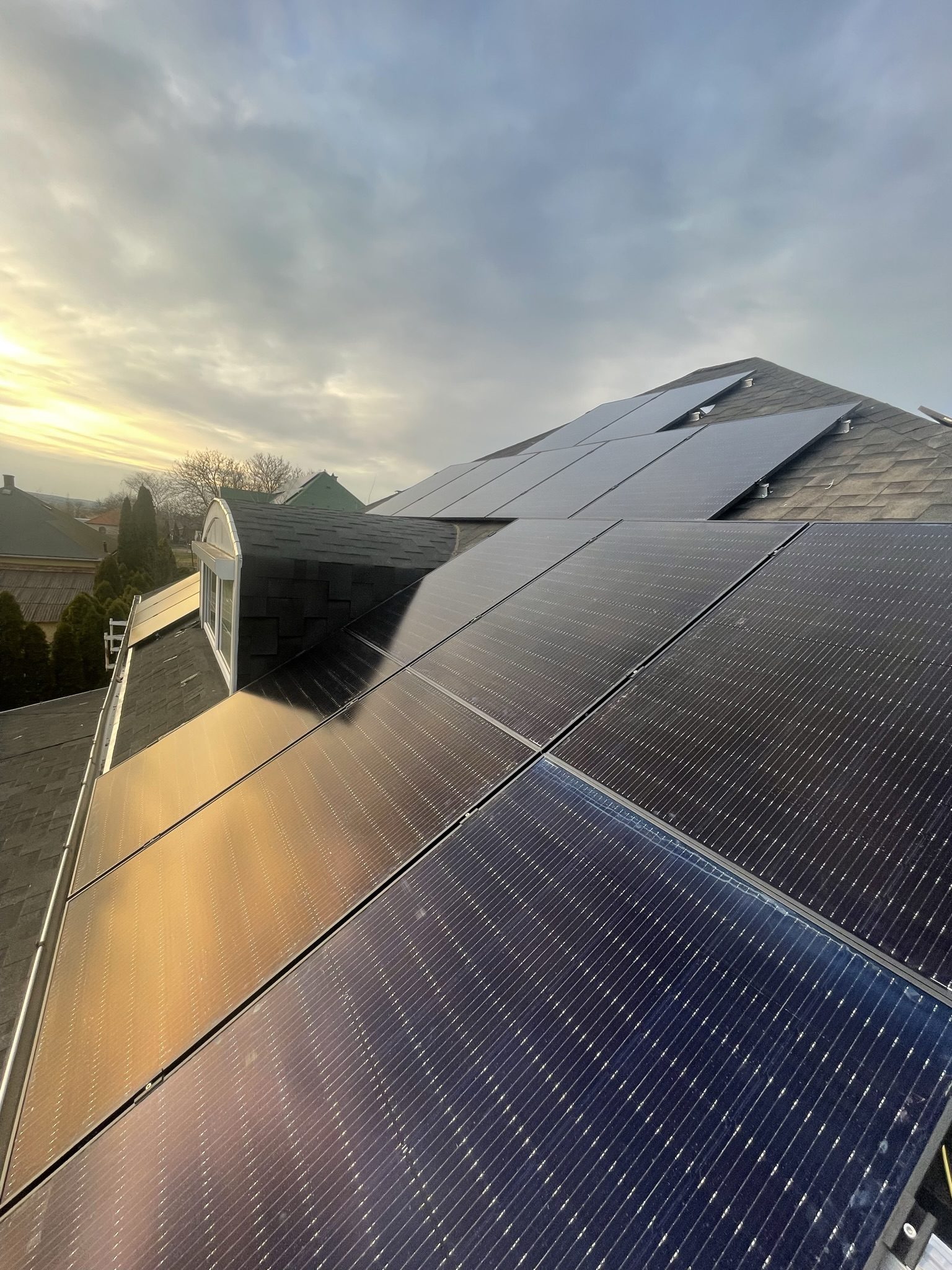
Snow covers the panel for a while, but thanks to the tilt and the dark glass it melts or slides off quickly once the sun is out. Some light gets through even a thin layer. Do not scrape it off: it can scratch the glass, and going onto the roof is dangerous. Winter loss from snow is typically a few percent on an annual basis.
Cold: the panel's friend
Panel efficiency is better in the cold. On a clear, cold, sunny winter day instantaneous power can match or briefly exceed a summer morning's, although the daily total is smaller because the days are short.
Batteries in winter
A battery charges less in winter and often does not fill. Still, stored energy covers the morning and evening peaks when there is generation. Lithium batteries must not be charged below freezing, so install in a heated space or with built-in heating. Winter self-sufficiency is typically 20-40 percent, summer 80-90 percent.
Realistic expectations
- In winter solar covers a fraction of consumption, and the grid remains essential.
- Annual payback comes from summer surplus and good spring and autumn yield.
- With a heat pump, smart control and storage reduce the winter shortfall but do not remove it.
SolarBay's simulation shows a monthly breakdown so your expectations match actual yield.
How can winter yield be improved?
A few things are worth considering. Freedom from shade matters more in winter, because with the low sun, chimneys and trees cast long shadows. Structured monitoring helps tell a winter shortfall caused by snow from one caused by a fault. If the building has a heat pump, schedule consumption for midday hours: pre-heating the buffer tank, producing hot water in the daytime. That way the little winter output is better used. The low yield of winter months is normal, not a fault, and annual payback is secured by the summer period.