When you choose solar panels today, the datasheet shows terms such as N-type, TOPCon, bifacial, half-cut, glass-glass or full black. These are not marketing words: each marks a real technical difference. Let us go through what they mean and what to look for.
N-type and P-type
This refers to the doping type of the silicon cell. Alongside the P-type (PERC) cells that were standard for years, N-type has become the leading technology. N-type cells are less sensitive to light-induced degradation (LID), so first-year power loss is smaller, annual degradation is slower, and they also perform better at high temperatures. In practice this means noticeably more energy over 25 to 30 years.
TOPCon
TOPCon (Tunnel Oxide Passivated Contact) is the most common N-type cell design. An ultra-thin oxide layer reduces charge carrier losses at the back of the cell, raising efficiency. Today's TOPCon modules typically reach around 21 to 23% module efficiency, and their temperature coefficient is better than that of older PERC panels, which counts in summer on a hot roof.
Half-cut, bifacial, glass-glass
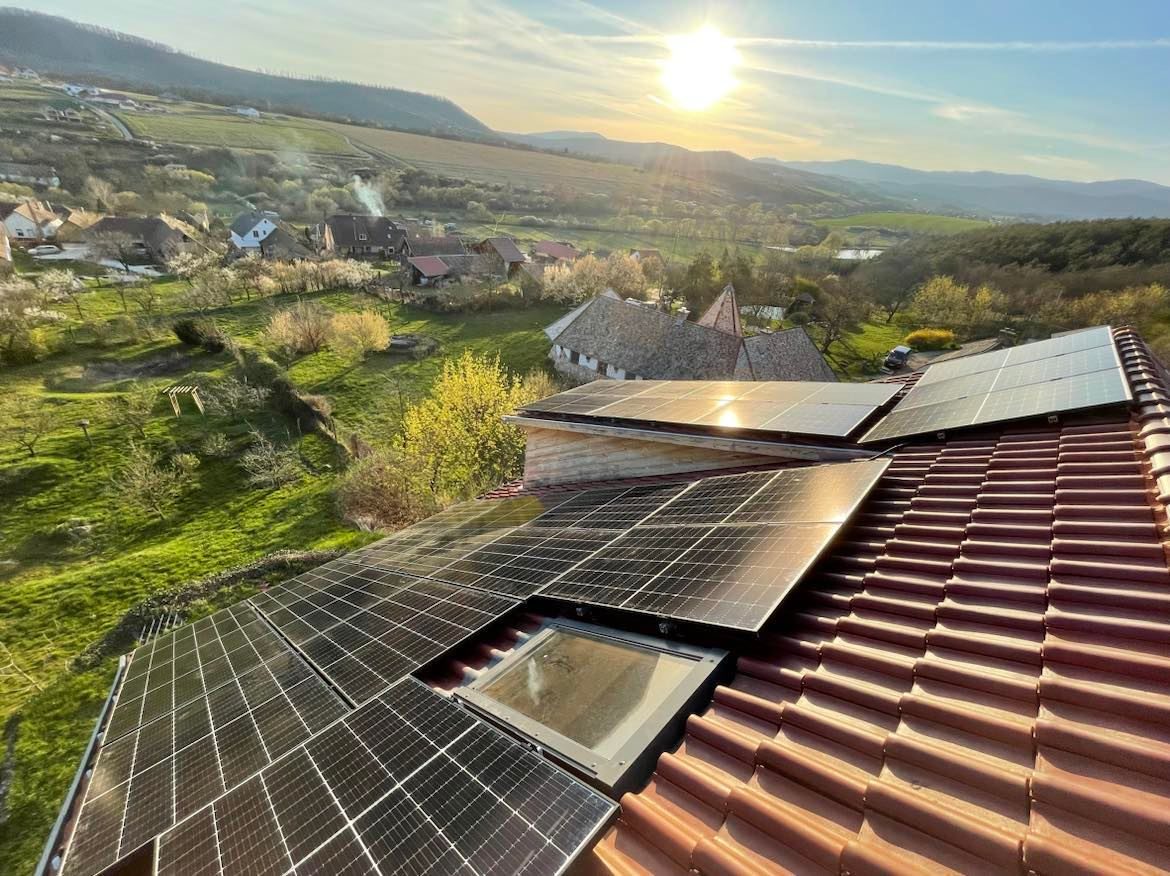
- Half-cut: the cells are cut in half, giving lower current and losses, and better behaviour under partial shading.
- Bifacial: the rear side also generates from reflected light. On a flat roof over a light surface, mounted higher, the gain is significant, while on a pitched roof it is small.
- Glass-glass: glass on both sides of the panel. It gives better protection against moisture, micro-cracks and mechanical load, so manufacturers generally offer a longer performance warranty.
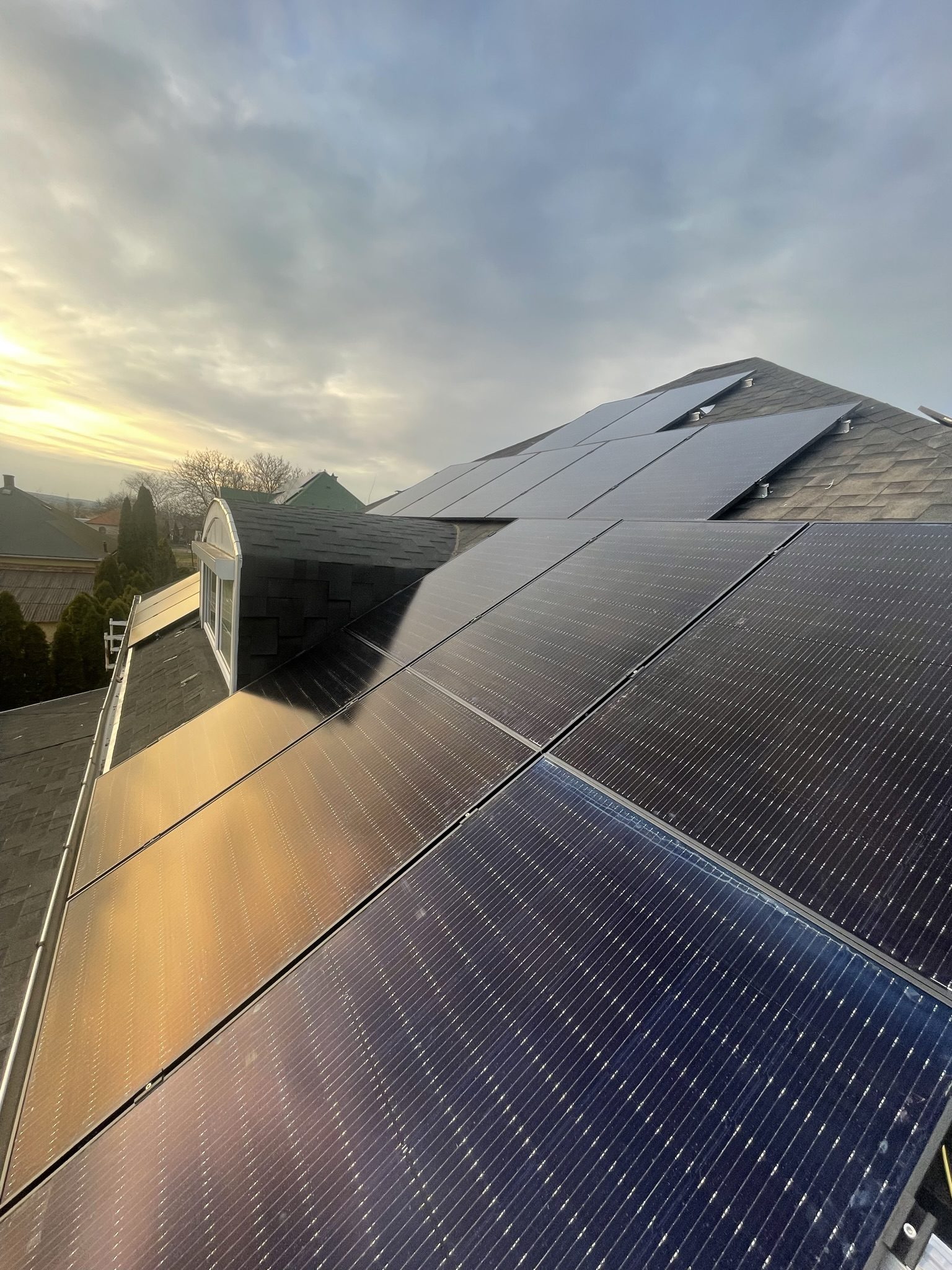
- Full black / black frame: an aesthetic choice, with a black frame and backsheet. It does not improve output but looks better on a home.
Examples from our range
| Panel | Typical construction | Where we recommend it |
|---|---|---|
| JA Solar 420 W | N-type TOPCon, 54-cell, compact size | Family house, limited roof, black version for appearance |
| Leapton 440 W | N-type, high output in a compact size | Cost-effective residential and small commercial systems |
| Astroenergy 425 / 435 W | N-type TOPCon, glass-glass version available | Residential roofs, longer performance warranty |
| Astroenergy 550 W | Large-format 72-cell module | Flat roofs, ground-mounted and industrial systems |
We always verify the exact model code, dimensions and warranty in the specific quote and on the manufacturer datasheet, because model variants can differ.
What to check on the datasheet
- Rated power and efficiency: more watts is not always better if the panel is also larger. Power per square metre is what counts.
- Temperature coefficient: the smaller the negative value, the better the panel handles summer heat.
- Degradation: first-year and annual values, and the length of the linear performance warranty.
- Product and performance warranty: product certification (IEC, CE) and the manufacturer's financial stability also matter.
- Size and weight: roof load capacity and the mounting system must match, and a larger format needs more fixing points and more careful design.
In short, for a new system an N-type TOPCon panel is today the sensible baseline. Glass-glass and black versions add mainly in lifetime and appearance. Send us your roof size and orientation and we will tell you which panel gets the most out of it.
Shading and mounting
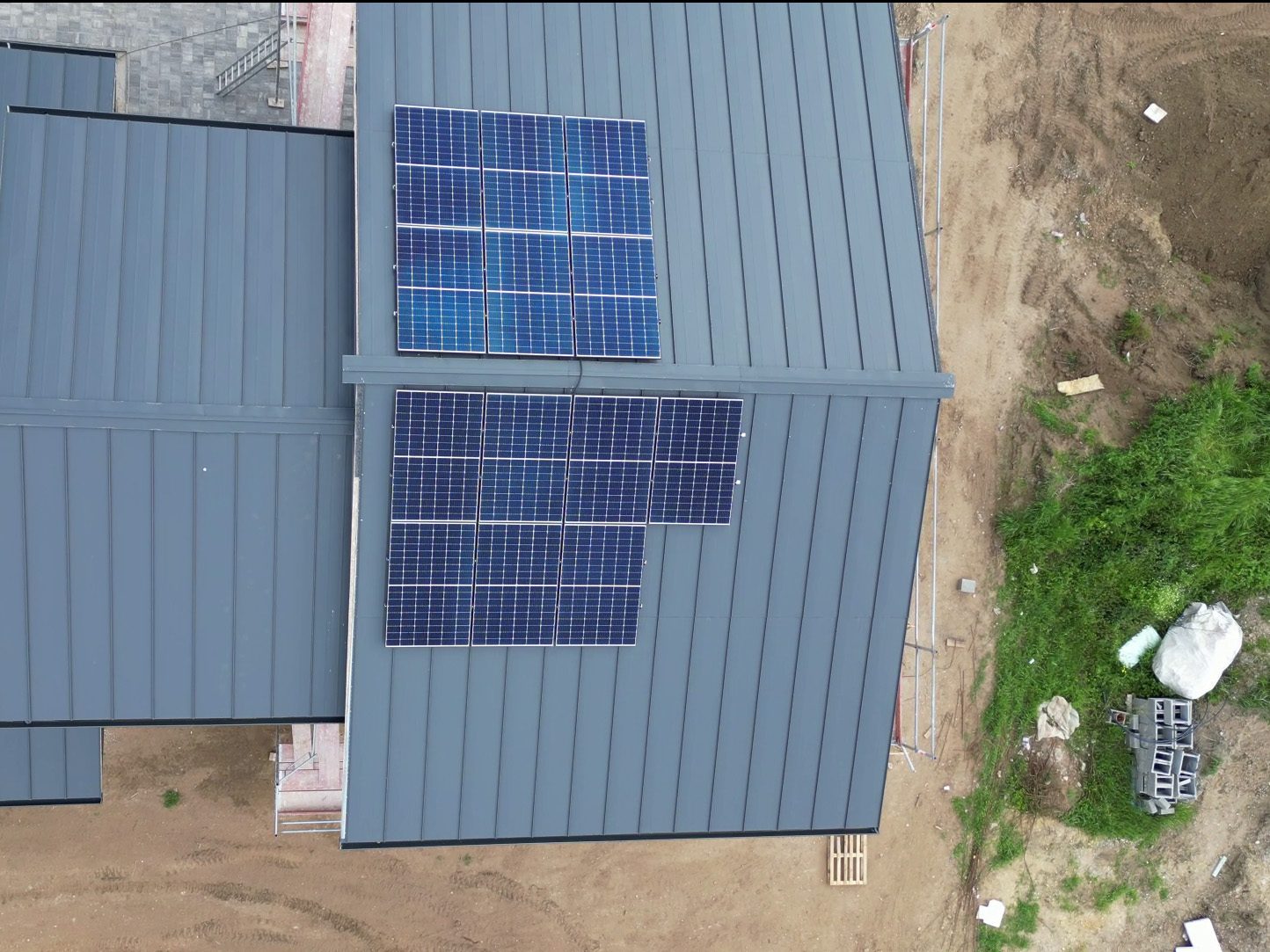
The roof layout also matters when choosing panels. On a roof with chimneys, tight space or partial shading, a half-cut design and proper string layout or optimisers help a great deal. With large-format panels the mounting system must also withstand snow and wind load, so a structural check is part of the design.